A few months ago, during a strategy retreat with a colleague, a comment he made caught my attention in an unexpectedly powerful way.
He spoke about the importance of understanding not only the skills of Gen Z employees, but also their worldview, motivations and rhythms — and, perhaps more importantly, the need to genuinely bring their perspectives into leadership conversations.
That thought stayed with me.
It made me reflect on how much the workplace has changed, and how much of what we still regard as “good management” was designed for a very different era.
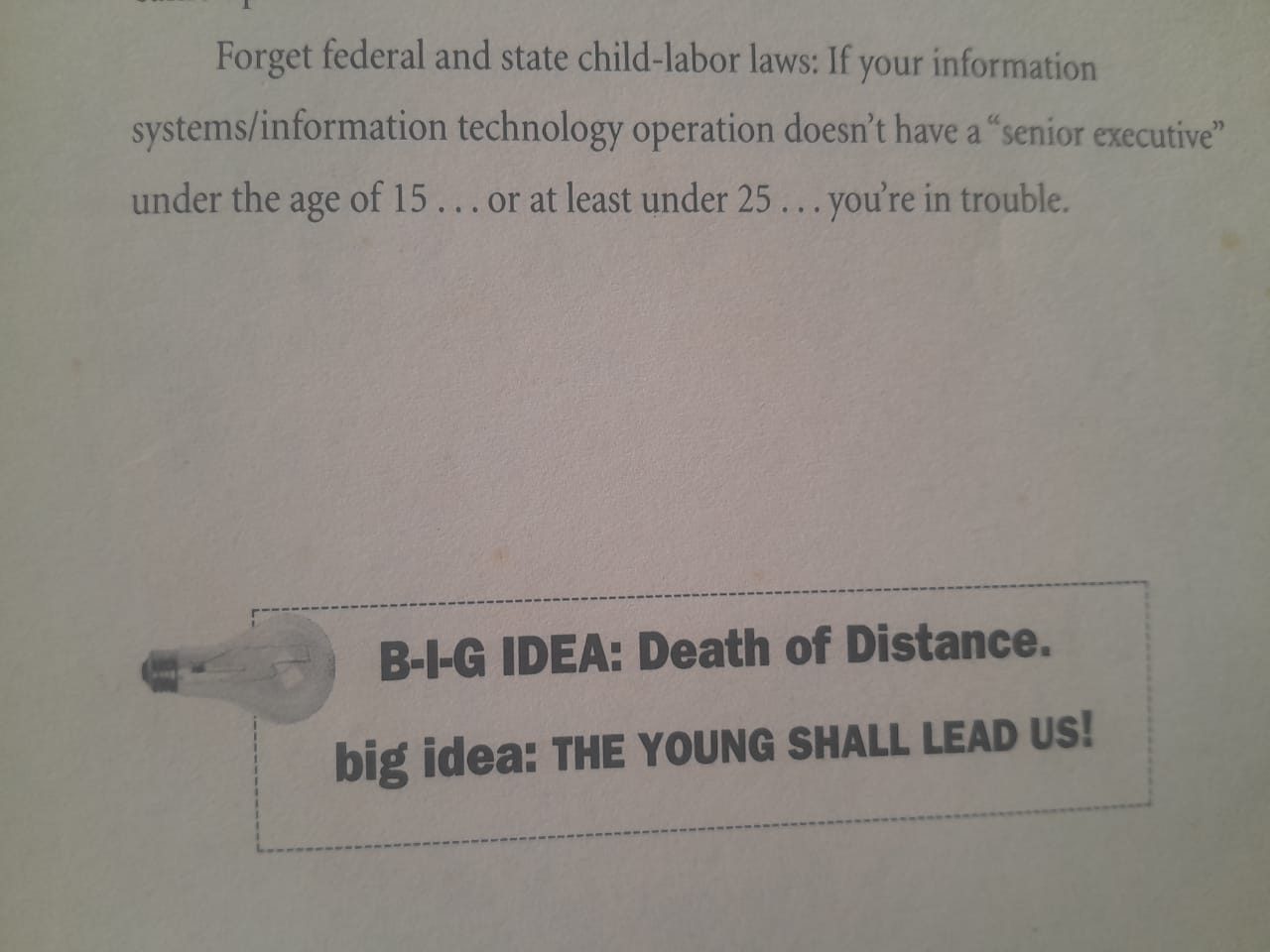
I remember reading Tom Peters’ In Search of Excellence decades ago and being struck by its emphasis on challenging conventional thinking and putting people at the centre of organisational performance. Some of those ideas felt theoretical then. Today, many feel remarkably relevant.
TOM PETERS’ QUOTE (INSEARCH OF EXCELLENCE)
What has changed is the context.
Younger generations are entering organisations shaped by digital technology, rapid information flows, changing expectations of work and increasingly fluid career paths. Their influence is no longer confined to technology or entry-level roles. It is beginning to shape conversations around communication, culture, customer experience, collaboration, productivity and, increasingly, leadership itself.
The question for business leaders is therefore not simply:
“How do we manage Gen Z?”
A more useful question may be:
“What is Gen Z teaching us about the workplace we are building?”
The Workplace Is Changing - But Not Everything Needs to Change
Every generation brings different expectations into the workplace.
That is not new.
What is different today is the speed and scale of change surrounding those expectations.
Technology has altered how people communicate, learn and collaborate. Career paths have become less linear. Information is available almost instantly. Employees can compare workplace experiences across organisations and industries with unprecedented ease.
For leaders, this creates an interesting tension.
Organisations cannot simply abandon established principles of accountability, discipline, performance and commercial responsibility because a new generation has entered the workforce.
But neither should they assume that practices developed decades ago remain effective simply because they are familiar.
The challenge is to distinguish between principles worth preserving and practices that have simply survived because nobody has questioned them.
That is where Gen Z may have something important to teach us.
1. Experience Matters - But So Does a Fresh Perspective
Organisations naturally value experience.
Experience brings pattern recognition, institutional knowledge and an understanding of how things have worked in the past. It can help leaders avoid repeating costly mistakes.
But experience can also create blind spots.
When people spend years operating within the same systems, they can become accustomed to inefficiencies, assumptions and routines that no longer serve the organisation.
Younger employees often enter without that historical baggage.
They may ask:
Why do we do it this way?
Why does this process require so many steps?
Why can’t customers interact with us differently?
Why is this information still being communicated this way?
Not every question will lead to a better answer.
But organisations that never invite those questions may fail to see opportunities that have become invisible to those closest to the existing system.
The lesson is not that experience is becoming less valuable.
It is that experience and fresh perspective are more powerful together than either is alone.
2. Digital Fluency Is Not the Same as Digital Capability
Gen Z have grown up in an environment of rapid technological change. Many younger employees are comfortable experimenting with new platforms, applications and digital tools.
That can be a significant organisational advantage.
But leaders should be careful not to confuse familiarity with technology with the ability to use technology strategically.
Knowing how to use a tool is different from knowing which problem the tool should solve.
Digital fluency becomes valuable when it is combined with commercial judgement, critical thinking and an understanding of the organisation’s objectives.
This creates an important opportunity for businesses.
Rather than simply expecting younger employees to adapt to existing systems, organisations can invite them into conversations about how technology can improve the way the business works.
That can turn individual digital familiarity into organisational capability.
3. Autonomy Requires Accountability
One of the more visible shifts in workplace expectations is the desire for greater flexibility and autonomy.
Younger employees are often less comfortable with management practices based primarily on physical presence, rigid schedules or authority for authority’s sake.
That does not necessarily mean they reject discipline.
It may mean that they increasingly expect clarity about outcomes rather than constant supervision of activity.
This presents an opportunity for organisations to rethink management.
Good management should not require people to be watched constantly.
It should establish:
clear expectations;
meaningful objectives;
appropriate decision rights;
measurable outcomes;
regular feedback; and
accountability for results.
The principle is simple:
Greater autonomy should not mean less accountability. It should mean greater clarity about what people are accountable for.
That is a management challenge worth addressing regardless of generation.
4. Purpose Matters - But Purpose Must Meet Performance
Younger employees often place considerable importance on values, authenticity, social impact and meaningful work.
Business leaders sometimes interpret this as a generational demand that organisations become more purpose-driven.
There is another way to look at it.
Perhaps employees are increasingly asking organisations to demonstrate that what they say actually matches what they do.
That is a useful challenge.
An organisation cannot credibly promote integrity while tolerating poor behaviour from senior leaders.
It cannot talk about customer centricity while designing processes that frustrate customers.
It cannot promote development while giving people no opportunity to learn or grow.
And it cannot speak about performance while avoiding difficult conversations about underperformance.
Purpose becomes meaningful when it is reflected in organisational behaviour.
This makes culture and leadership increasingly important.
5. Development Is Becoming a Leadership Issue
Perhaps one of the most important lessons is the changing relationship between people and development.
Many younger employees expect opportunities to learn, receive feedback, build new skills and understand where their careers can go.
This should not be dismissed as impatience.
For organisations, it creates a strategic question:
How deliberately are we building the capabilities we will need in the future?
Development should not mean sending people on courses simply because training appears on an annual HR calendar.
It should begin with the capabilities the organisation actually needs.
What must our managers become better at?
Where are our leadership gaps?
What skills will our strategy require in three years?
Which capabilities are currently limiting execution?
How do we prepare people for responsibilities they may have to assume tomorrow?
That moves people development from an administrative activity into a strategic capability-building agenda.
The Bigger Leadership Question
None of this means that every expectation associated with Gen Z should automatically be adopted.
That would be another form of poor leadership.
Leaders still have to make choices.
Some organisational disciplines exist for good reasons. Accountability matters. Performance matters. Commercial responsibility matters. Standards matter. Difficult decisions cannot always be replaced with consensus.
The opportunity is to ask better questions.
Which of our old rules still create value?
Which ones have become constraints?
What can younger employees teach us that experience alone may not reveal?
Where should we adapt – and where should we remain firm?
This is where the conversation becomes much bigger than Gen Z.
It becomes a conversation about the organisation itself.
From Generational Difference to Organisational Advantage
The strongest organisations will probably not be those that simply become “Gen Z friendly.”
They will be those capable of bringing different generations, experiences and perspectives together around a common purpose and a clear standard of performance.
That requires leadership.
It requires managers who can listen without surrendering judgement.
It requires cultures that encourage challenge without creating disorder.
It requires systems that provide autonomy without losing accountability.
And it requires organisations willing to develop people deliberately rather than waiting until capability gaps become performance problems.
Gen Z may therefore be less a problem for organisations to solve than a signal of how the workplace is evolving.
Their expectations challenge some established assumptions about work, leadership, technology and organisational culture.
Some of those assumptions deserve to change.
Others deserve to be defended.
The leadership task is knowing the difference.
The Future of Work May Begin With Listening
The future of work will not be created by Gen Z alone.
Nor will it be created by today’s senior leaders alone.
It will emerge from the interaction between experience and new perspectives, established disciplines and new possibilities, organisational needs and changing expectations.
For business leaders, the opportunity is to create an environment where those perspectives can meet productively.
Not every new idea should be adopted. But every serious organisation should be willing to listen.
Perhaps that is the most useful lesson Gen Z is already teaching businesses:
The organisations best prepared for the future will not be those that simply preserve the rules that brought them here. They will be those capable of questioning them, learning from new perspectives and deliberately deciding what comes next.
And that is where the real opportunity lies – not in replacing the old with the new, but in knowing which old rules to keep, which to rethink and what new possibilities to create.